Edit Scene: The Creative Fix That Doesn't Break Your Shot
Introducing Edit Scene—localized regeneration that lets you tweak dialogue, props, and framing without losing your approved footage.
The Problem We're Solving
We've watched it happen countless times: a creator nails a shot, approves it, then realizes the dialogue needs a word changed or the framing needs a slight adjustment. They face an impossible choice—accept "close enough" or regenerate the entire scene and risk losing everything they already loved about it.
When full regeneration is the only option, creators stop making small changes. They ship the version that's 85% there instead of the version that's right. That's not creative control. That's creative surrender.
Introducing Edit Scene
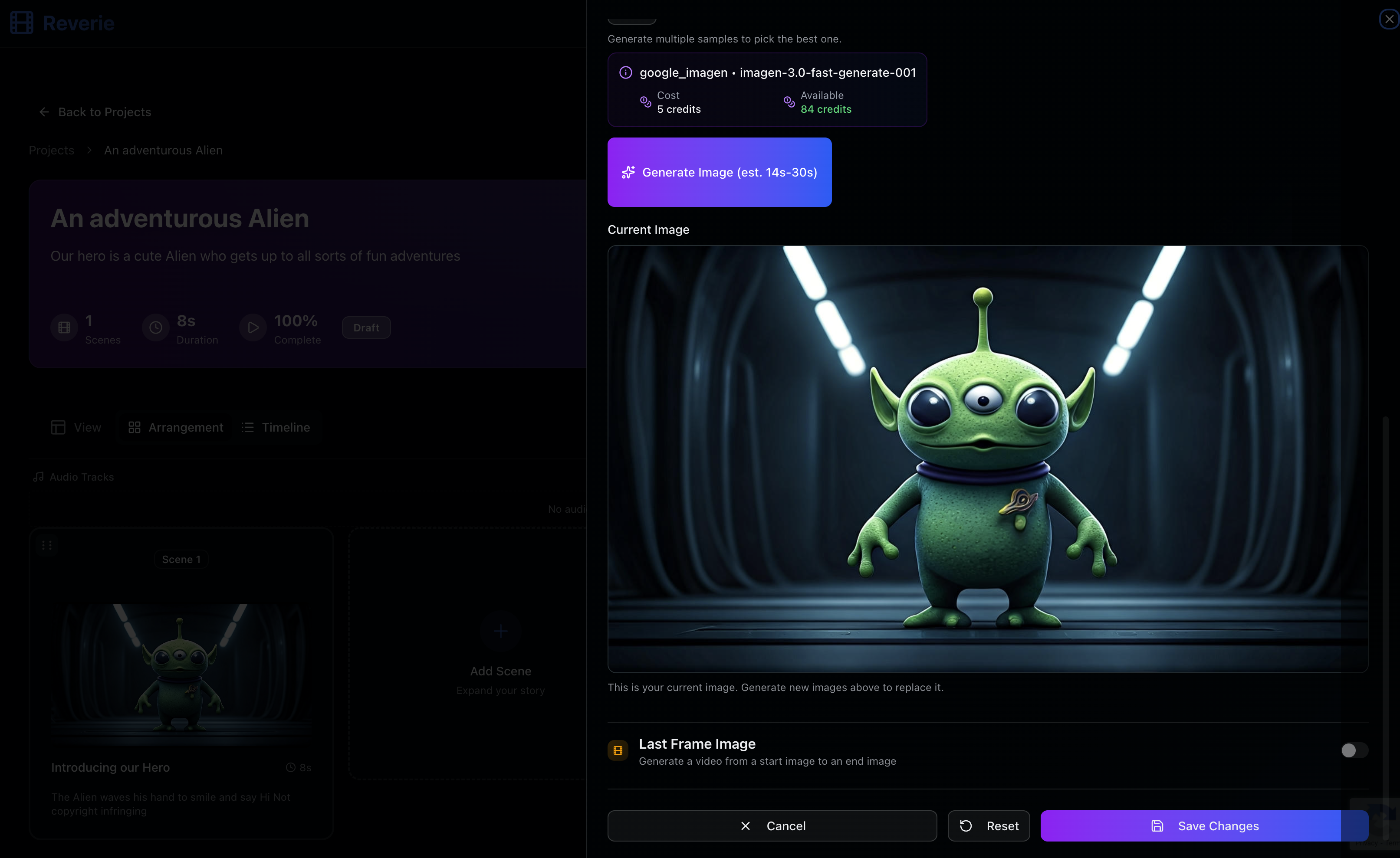
Edit Scene changes the equation entirely. Now, you can make surgical edits to your approved footage:
- Adjust dialogue — change a line or inflection without touching the camera work
- Swap props — replace an object in the frame without regenerating the background
- Reframe the shot — shift composition or zoom without losing the actor performances you approved
- Lock everything else — the untouched regions stay frozen exactly as you rendered them
Only the edited region regenerates. Everything else holds.
Why This Matters for Your Workflow
The creative process is iterative, and iteration shouldn't be punished. Every small fix shouldn't cost you a full regeneration cycle—in time, in credits, in the mental overhead of re-approving a shot you already loved.
Edit Scene respects the fact that filmmaking is about layers of decisions. You lock in the performance, then adjust the prop. You lock in the composition, then tweak the dialogue. Each decision compounds without erasing the ones before it.
This is how traditional filmmaking works on set—you adjust lighting without resetting the camera, you redirect an actor without moving everyone else. AI filmmaking should work the same way.
The Engineering Trade-off
Localized regeneration is harder than full regeneration. The model has to blend new content seamlessly into an existing frame instead of starting with a clean canvas. Consistency is trickier. Seams are a real consideration.
We decided the harder engineering problem was worth it. Because the alternative—training creators to stop making small changes—is worse. Creative confidence dies in that constraint.
We've spent weeks tuning the blending logic, stress-testing edge cases, and making sure that when you edit a region, the rest of the shot stays locked and true. The work is real, but the payoff is creative freedom that actually feels free.
What's Next
Edit Scene is live now in Reverie. We're monitoring how creators use it, what edge cases come up, and where the blending logic needs refinement. We're also exploring ways to expand the editing toolset—keyframe-level control, multi-region edits, and other features that keep creative iteration fast and cheap.
We're building this in public because we want your feedback. If Edit Scene doesn't solve your problem, or if you hit a limitation, tell us. We iterate on what creators actually need.
See It in Action
Head over to Reverie and try Edit Scene yourself. You'll get 300 free credits to explore it—enough to run through several edit cycles and see how it transforms your workflow.
Visit https://reveriemovies.com?utm_source=blog&utm_medium=updates&utm_campaign=edit-scene-localized-regeneration to get started. We're just getting started, and we're building this with you.