Why AI Films Feel Disjointed: The Last Frame Problem
We solved the structural flaw in shot-by-shot AI video generation by carrying forward the last frame of each scene to anchor the next one.
Scene four should not start from a blank canvas. Scene three already answered most of the questions—what the room looks like, what your character is wearing, where the light is coming from. Yet most AI video generators treat every shot like it exists in isolation, forcing you to re-describe the same details over and over, hoping each description lands close enough to the last.
It never quite does. That structural flaw is why so much AI video feels like a slideshow of related images rather than a cohesive film.
The Continuity Crisis in Shot-by-Shot Generation
When you generate a film one clip at a time, each prompt starts cold. The model has zero context about the visual state you just created. You end up manually resetting the scene, the character position, the lighting—every single frame.
The result? Jarring cuts. Colors that shift. Characters who seem to teleport across the room. Sets that reshape themselves between takes.
This isn't a rendering glitch or a post-production fix. It's a structural flaw in how the thing was built. The system wasn't designed to remember.
Introducing: Linked Scenes
We approached this differently. Instead of asking the model to invent continuity from memory, we pass it forward visually.
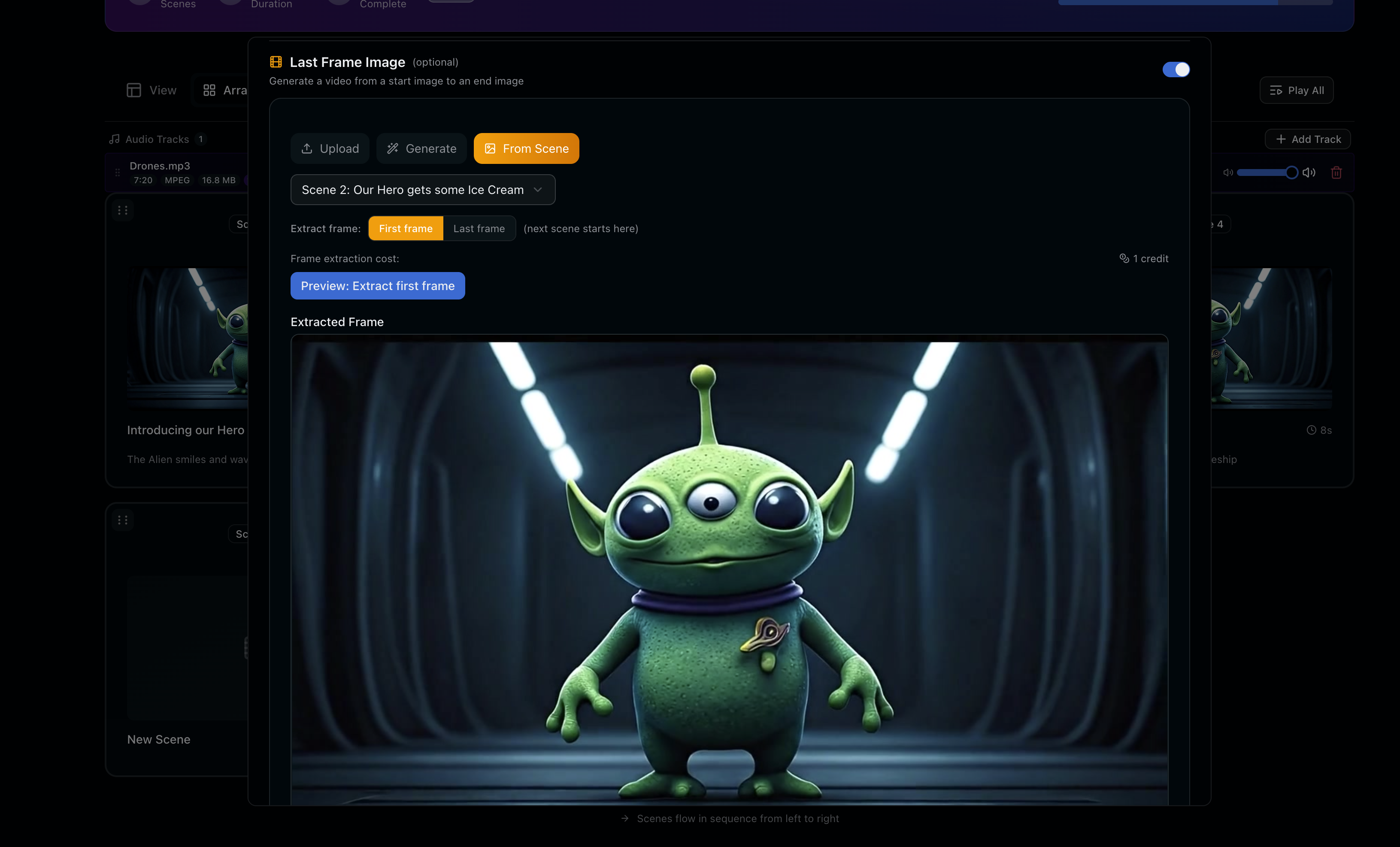
Scene four now begins from where scene three actually ended—not a description, not a guess, but the real last frame carried forward as visual context. Same space. Same person. Same light. The model inherits the state rather than guessing at it.
The difference is immediate. Continuity stops being something you polish in post. It becomes a property of how the scenes are assembled.
Why This Matters
Linked scenes unlock three critical improvements:
- Visual consistency — Characters stay in frame. Lighting doesn't jump. Props stay where you left them.
- Faster iteration — No more wrestling with re-descriptions. One solid prompt per scene, then let the linking handle the rest.
- Believable narratives — When scenes flow without jarring transitions, audiences stay immersed. The film reads as film, not a collection of renders.
This is the kind of thing that sounds small on paper but changes everything in practice. It's the difference between something that looks like AI and something that just is cinema.
What's Next
We're testing linked scenes across different shot types and narrative structures. Early results show dramatic improvements in multi-minute sequences. We're also exploring how this pattern scales to longer narratives where multiple threads need to hold their continuity independently.
This is one piece of a larger puzzle: making AI filmmaking less about fighting the tool and more about working with its strengths.
See It in Action
We're shipping these updates in real time. Head over to reveriemovies.com to try it yourself—you get 300 free credits to test linked scenes and build your own AI films from the ground up. We're building this in public, and we'd love to hear what you create.