From Clips to Stories: Why Prompt-to-Story is the Real Challenge
AI can generate beautiful 5-second clips reliably. The real bottleneck isn't resolution or speed—it's stitching 50 coherent shots into a story that actually works.
From Clips to Stories: Why Prompt-to-Story is the Real Challenge
The Clip Problem Is Solved
Let's be honest: generative video models have gotten scary good. You can write a detailed prompt, hit generate, and get a beautiful, coherent five-second shot back—reliably. Not every time, but close enough that it feels like a won battle. The models have arrived. The clip generation fight is over, and the AI won decisively.
But here's the thing that keeps me up at night: nobody ordered a five-second clip. They ordered a film.
The Gap Nobody's Talking About
A film isn't fifty perfect seconds stitched together randomly. It's fifty shots that know about each other. Characters who stay the same person across scenes. A tone that holds even as the setting changes. A structure where the pacing in act two echoes the opening, where tension builds because of previous choices, not in spite of them.
That's filmmaking. That's the gap.
Right now, the industry is collectively optimizing the wrong thing. We're chasing higher resolution, faster generation times, more photorealism. Those are all real improvements. But the actual bottleneck—the thing stopping AI from generating real stories—moved somewhere else entirely.
Conversational Journeying: Our Bet
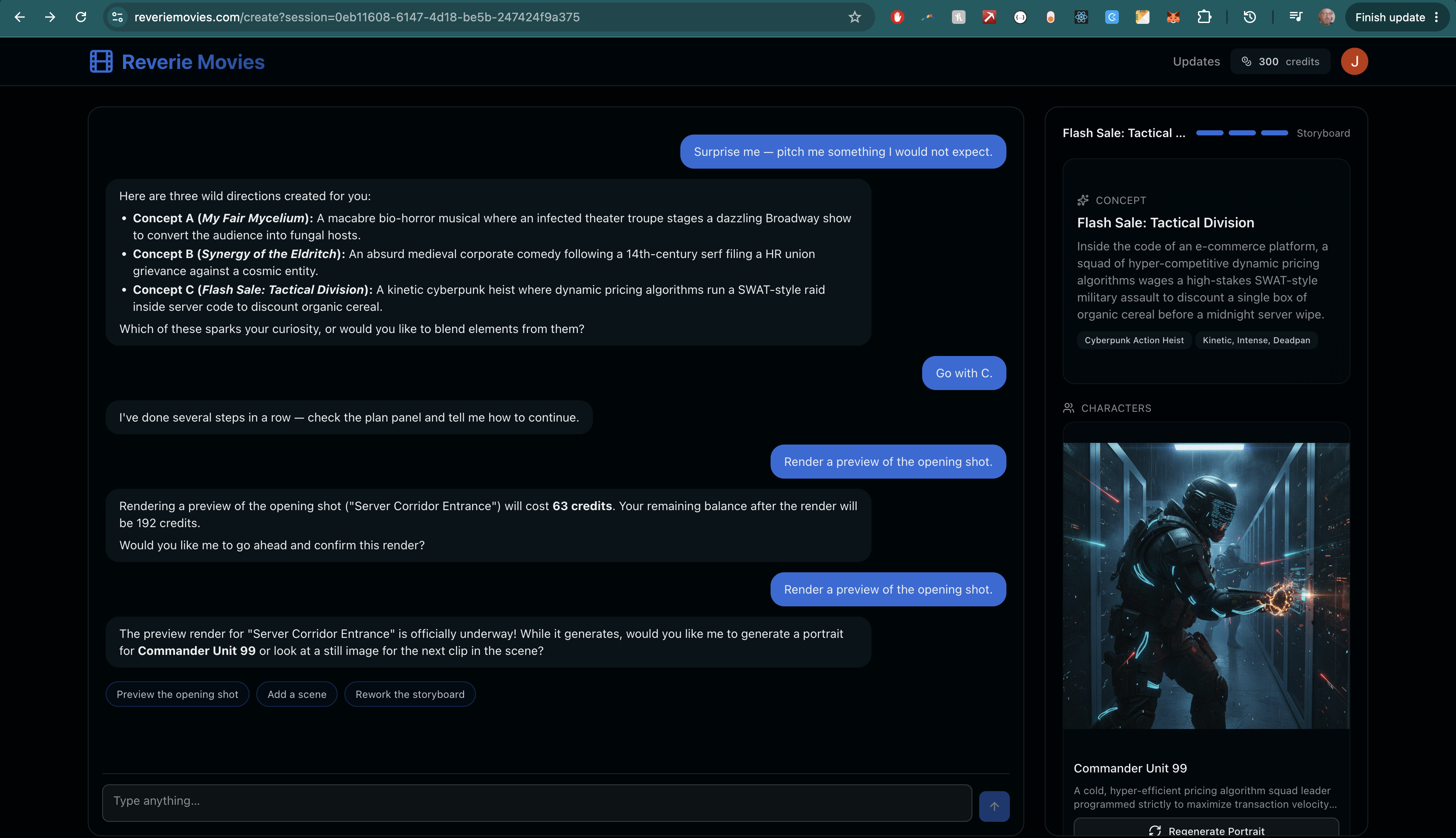
So what's the answer? We think it's Conversational Journeying.
Instead of throwing a prompt into the void and hoping for narrative gold, you talk through the story with the system. You develop the world, the characters, the beats. You shape the tone. You make structural choices. Then—only then—you generate.
It inverts the whole pipeline:
- Talk first, generate second — Build the story in conversation, not in the model's latent space
- Character consistency — Define who your people are, so they stay that person across shots
- Tonal coherence — Establish the emotional DNA of your piece before you roll camera
- Story structure that lands — The eightieth second works because of what happened in the tenth, because you planned it that way
What's Next
We may well be wrong about how to solve this. The approach might need tweaking, iteration, rethinking entirely. That's the risk of building in public.
But I'm confident about one thing: we're right about the gap. The industry is leaving this problem on the table, still polishing the clip while the film waits to be made. That's an opportunity. That's where we're building.
Try It Out
If you're curious about how Conversational Journeying works in practice—or if you want to stress-test our thinking—head over to reveriemovies.com and sign up. New users get 300 free credits to experiment. We're building this in the open, and we'd love to hear what you find.