The Blank Canvas Isn't a UI Problem — It's a Thinking Problem
We shipped Conversational Journeying to solve the real blocker: helping filmmakers think through their ideas before they start building.
The blank canvas stops people cold. Not because they lack creativity, but because an idea alone isn't a movie yet. It's a feeling, a fragment, a half-formed thought that lives somewhere between your imagination and articulation. You need to talk it through with someone before you can build it.
So we built that someone.
The Real Problem Wasn't the Interface
We spent months trying to solve the blank canvas problem with UI tweaks. Fewer fields. Smarter defaults. Beautiful empty states. But none of it worked because the person staring at the screen wasn't actually stuck on the interface — they were stuck on the thought itself.
The problem wasn't clicks or complexity. The problem was clarity. Most filmmakers know they want something to exist, but they don't yet know what it is.
When you hand someone a prompt box and say "describe your movie," you're asking them to do the thinking and the articulation at the same time. That's backwards. You think by talking. You talk to find out what you actually want.
Introducing Conversational Journeying
Today we shipped Conversational Journeying, and it changes how you start a project at Reverie.
You don't begin with a blank project. You begin with a conversation. Tell us you want something weird. Ask us to surprise you. Push back on an idea. Blend two concepts together. Throw something out and start over.
As you talk, a playground builds itself alongside you:
- Concept — your core story idea, refined through dialogue
- Tone — the emotional and aesthetic feel
- Characters — who they are, what drives them
- Storyboard beats — the narrative spine
- Preview shots — visual snapshots of key moments
Nothing is committed. You can wander. Break things. Change your mind. The conversation is the work.
Why Conversation Comes First
We learned this lesson the hard way: filmmakers don't need more features or smarter AI. They need permission to think out loud.
The best creative decisions happen in dialogue, not in isolation. When you're bouncing ideas, reacting in real time, building on what just landed — that's when the real idea emerges. That's when the fragments become a vision.
Conversational Journeying treats that dialogue as the first step, not something that happens after you've already committed to a direction. It moves the thinking into the tool, so the tool becomes a creative partner, not just a render engine.
What Happens Next
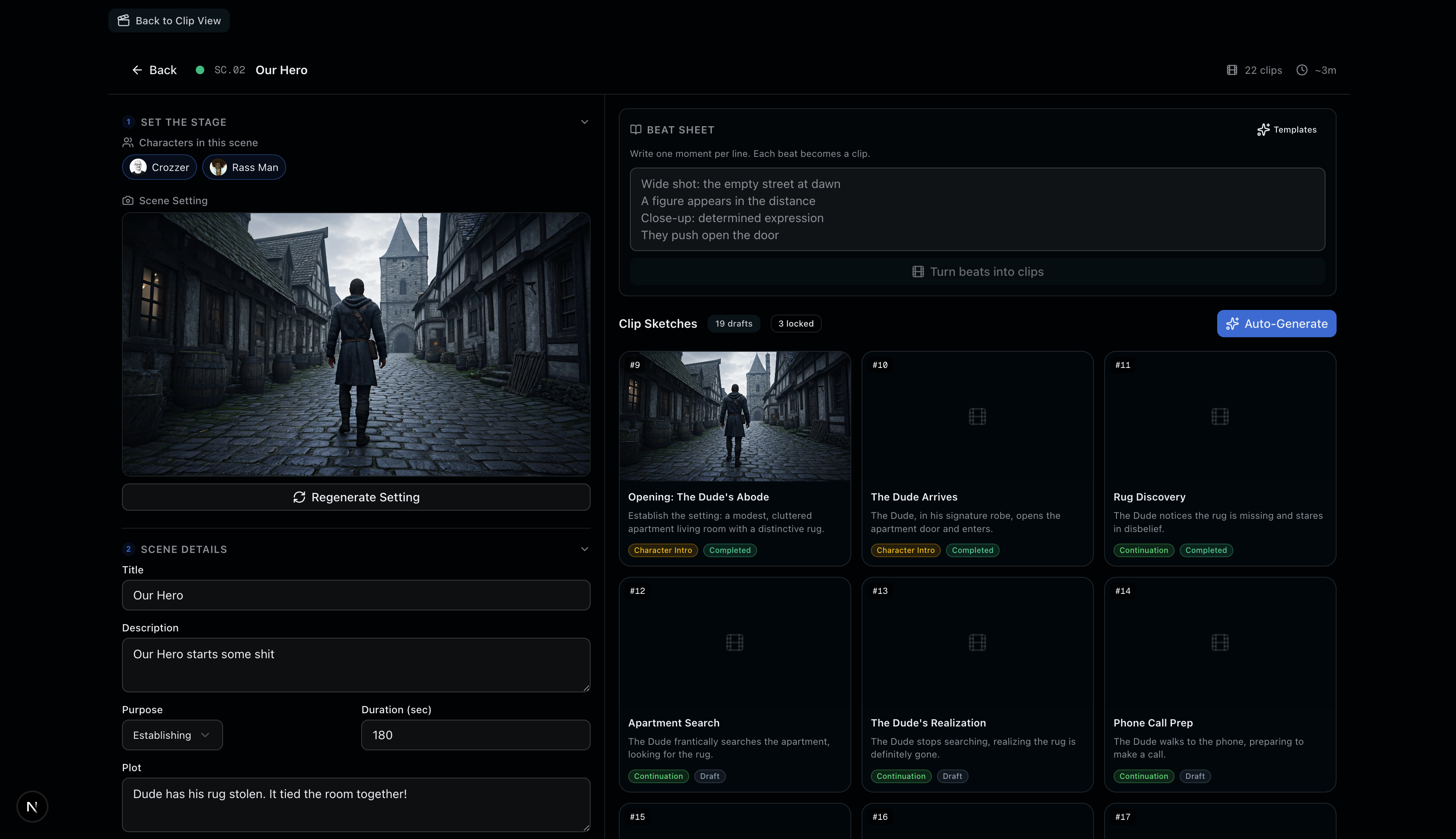
Once your journey is solid — once you've talked through the concept, tone, characters, and beats — you move into the Scene Planner. That's where you build individual scenes, shot by shot. But you're no longer staring at a blank canvas. You're building on something real, something you've already thought through.
The conversation becomes the blueprint.
Ready to Build on Solid Ground?
If you've ever felt paralyzed by the blank page, this is for you. Start a conversation instead of staring at an empty project. Head to reveriemovies.com and get 300 free credits to explore Conversational Journeying for yourself.